Reading Guide: Artificial Intelligence: Its Scope and Limits
For philosophy, cognitive science and AI readers who want to probe what machines can and cannot do
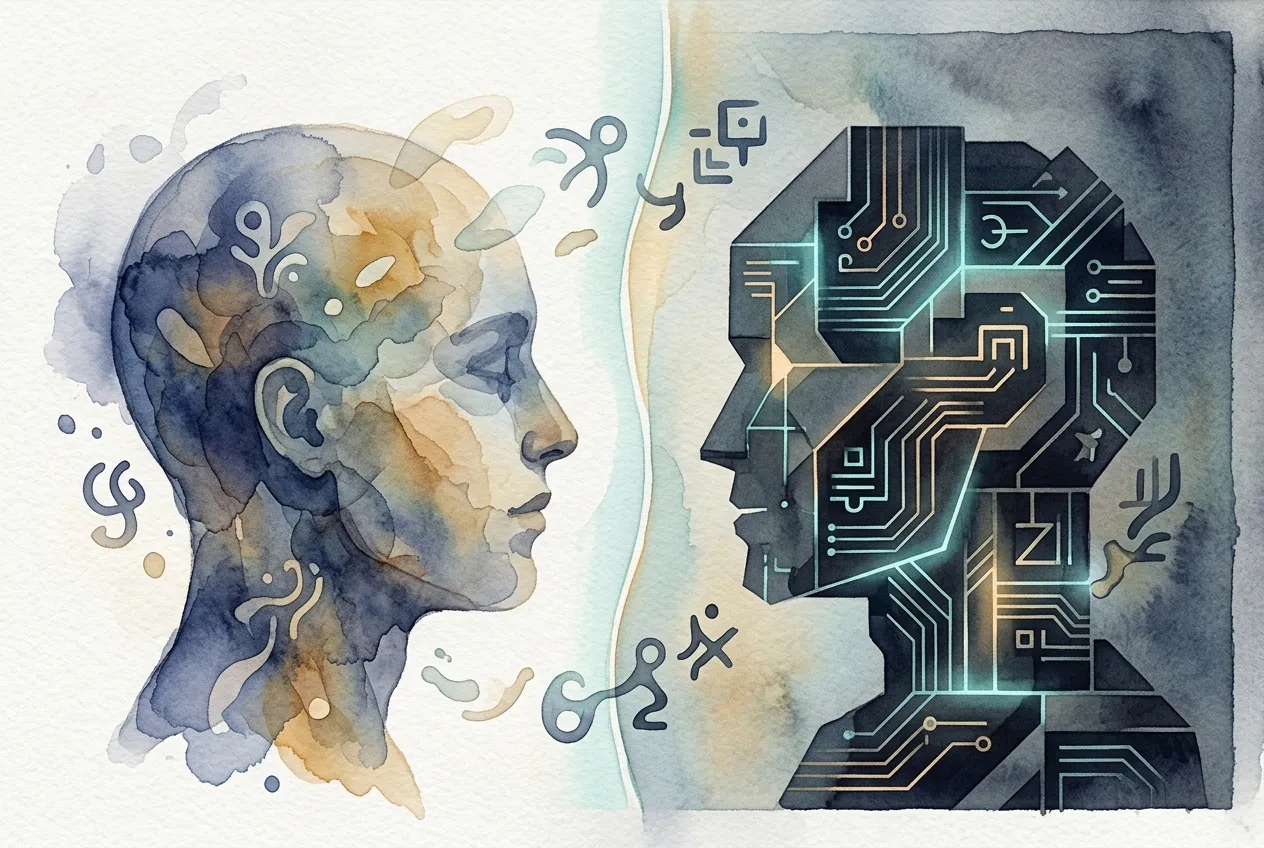
Most AI books show you how to build intelligent systems. James H. Fetzer's Artificial Intelligence: Its Scope and Limits asks a different question: what can such systems achieve in principle, and where do they stop? Published in 1990 as volume 4 of the Studies in Cognitive Systems series, it is a philosopher's sustained critique of the idea that all thinking is computation. Today's language models make that question more pressing than ever, and this guide will help you read the book with a clear plan.
Get the book: View Artificial Intelligence: Its Scope and Limits on Amazon
What this book is (and who it's for)
Fetzer, who taught philosophy at the University of Minnesota Duluth, targets what he calls the "standard conception" of AI: the view that the theory of computability marks the boundaries of thought because thinking itself is computational. That position grows out of Newell and Simon's physical symbol-system hypothesis and extends into computational theories of language and mind. Fetzer's central tool is a distinction between systems in which signs are meaningful for the users of a system and systems in which signs are meaningful for use by the system itself. Using that distinction, he tries to mark out what AI can and cannot be expected to do.
This is a work of philosophy, not a programming text. It suits graduate students and advanced undergraduates in philosophy of mind, cognitive science and AI. It also suits engineers and researchers who want rigorous arguments about meaning, knowledge and machine understanding. You don't need to write code, but you will get more out of it if you are comfortable with careful argument and some formal reasoning.
Before you start
- Know the classic positions. Get a working sense of the symbol-system hypothesis, the computational theory of mind and the Turing test. A good encyclopedia entry on each is enough.
- Brush up on basic logic. The chapters on knowledge and program verification assume you are comfortable with deductive vs. inductive reasoning and the idea of a formal proof.
- Keep a glossary. Fetzer uses terms such as sign, semiotic system and mentality in precise ways. Write down each definition when it first appears.
- Read it as a 1990 text. Its examples come from expert systems and symbolic AI. Part of the fun is testing its arguments against modern machine learning.
How to read it
The book has nine chapters in three parts, and the order matters, because later arguments depend on distinctions drawn early on.
Part I: Metamentality (Chapters 1–3)
Read this part slowly and in full. Chapter 1 asks what artificial intelligence is. Chapter 2, on symbol systems and semiotic systems, is the core of the book: it sets up the sign-user distinction that everything else relies on. Chapter 3 applies it to theories of language and mentality. If you read only one chapter closely, read Chapter 2, and summarize its main distinction in your own words before moving on.
Part II: Knowledge and Expertise (Chapters 4–6)
These chapters move from meaning to knowledge. They cover the nature of knowledge, its varieties, and then expert systems. Readers new to epistemology should take Chapters 4 and 5 carefully. If you already know the theory of knowledge well, you can skim them and focus on Chapter 6, where the argument meets the dominant AI technology of the time.
Part III: Representation and Verification (Chapters 7–9)
Chapter 7 deals with knowledge representation. Chapter 8 tackles program verification, the question of what it means to prove that a program is correct. It speaks directly to software engineers, and computer scientists may want to read it early, out of order. Chapter 9, on minds, bodies and machines, pulls the threads together and is the natural ending.
Suggested first pass: Chapters 1–3, then 6, then 8 and 9. Go back to 4, 5 and 7 on a second reading.
Key ideas to take away
- The standard conception can be challenged. Equating thought with computation is a philosophical thesis, not a settled fact, and it can be examined argument by argument.
- Signs for users vs. signs for systems. Whether a symbol means something to the system that processes it, or only to the people who use the system, is the hinge of Fetzer's case.
- Knowledge is more than stored data. The middle chapters ask whether encoding information in a program amounts to the system knowing anything.
- Expertise has limits. The discussion of expert systems shows how the theory applies to real AI products.
- Verification is philosophically loaded. Proving a program correct and guaranteeing how it behaves on a physical machine are different claims. That point still matters for safety-critical software.
Practice and discussion questions
- In your own words, what is the difference between a symbol system and a semiotic system as Fetzer uses the terms?
- Does a modern large language model use signs that are significant for the system, or only for its users? Defend your answer with Fetzer's distinction.
- How does Fetzer's critique of the "standard conception" compare with other well-known objections to computationalism that you have met?
- What does the discussion of expert systems suggest about claims that today's AI tools "know" things?
- Explain why proving a program correct might not guarantee how it behaves when it runs. Can you think of a real-world example?
- Which of Fetzer's arguments do you think have aged best since 1990, and which would you revise in light of machine learning?
- If Fetzer is right about the limits of AI, what follows for how we should design and regulate AI systems?
Pair it with
- Theory of signs (semiotics). A general introduction to how signs, meaning and interpretation work will make Part I much easier to follow.
- Logic and automated reasoning. To see the formal side of AI that Fetzer is evaluating, look at the store's Logic for Programming, Artificial Intelligence, and Reasoning (LPAR 2001 proceedings) for a technical counterpoint.
- Modern machine learning. Read a contemporary text, such as Algorithms for Reinforcement Learning (also in the store), then ask whether learning systems escape or confirm Fetzer's limits.
Keep going
This is a demanding book, but it repays the effort. Few texts force you to say so clearly what you mean when you call a machine intelligent. Read Part I slowly, keep your glossary close, and bring today's AI systems into every chapter as test cases. You will come away with sharper questions and stronger arguments. Get Artificial Intelligence: Its Scope and Limits on Amazon or browse more titles on the BooksPlusAi shelf.
As an Amazon Associate, BooksPlusAi may earn from qualifying purchases.
Sources
Browse the books mentioned here and more on our shelves.










Comments
No comments yet — be the first to share your thoughts.
Join the discussion