Reading Guide: Artificial Intelligence and Integrated Intelligent Information Systems
For graduate students, researchers and engineers interested in hybrid AI, agents and intelligent product design
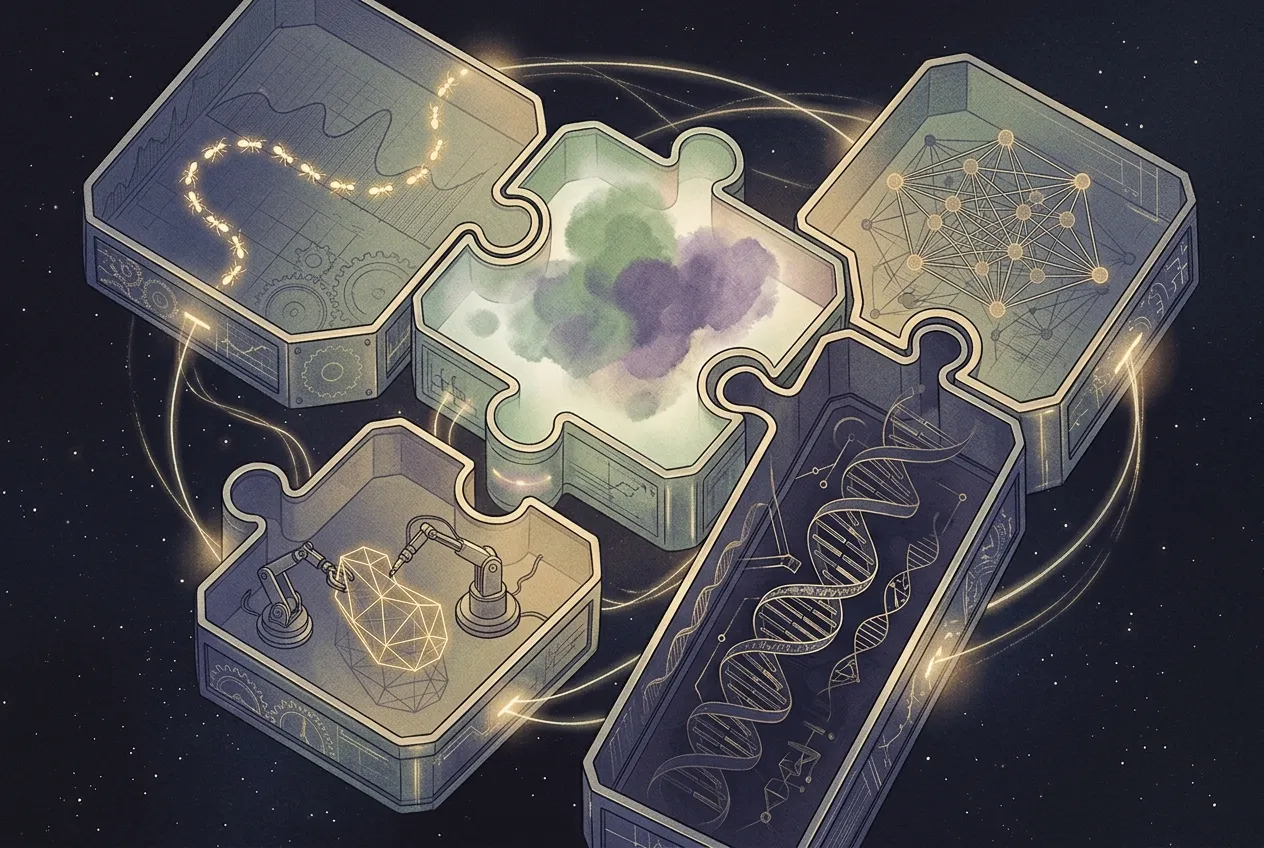
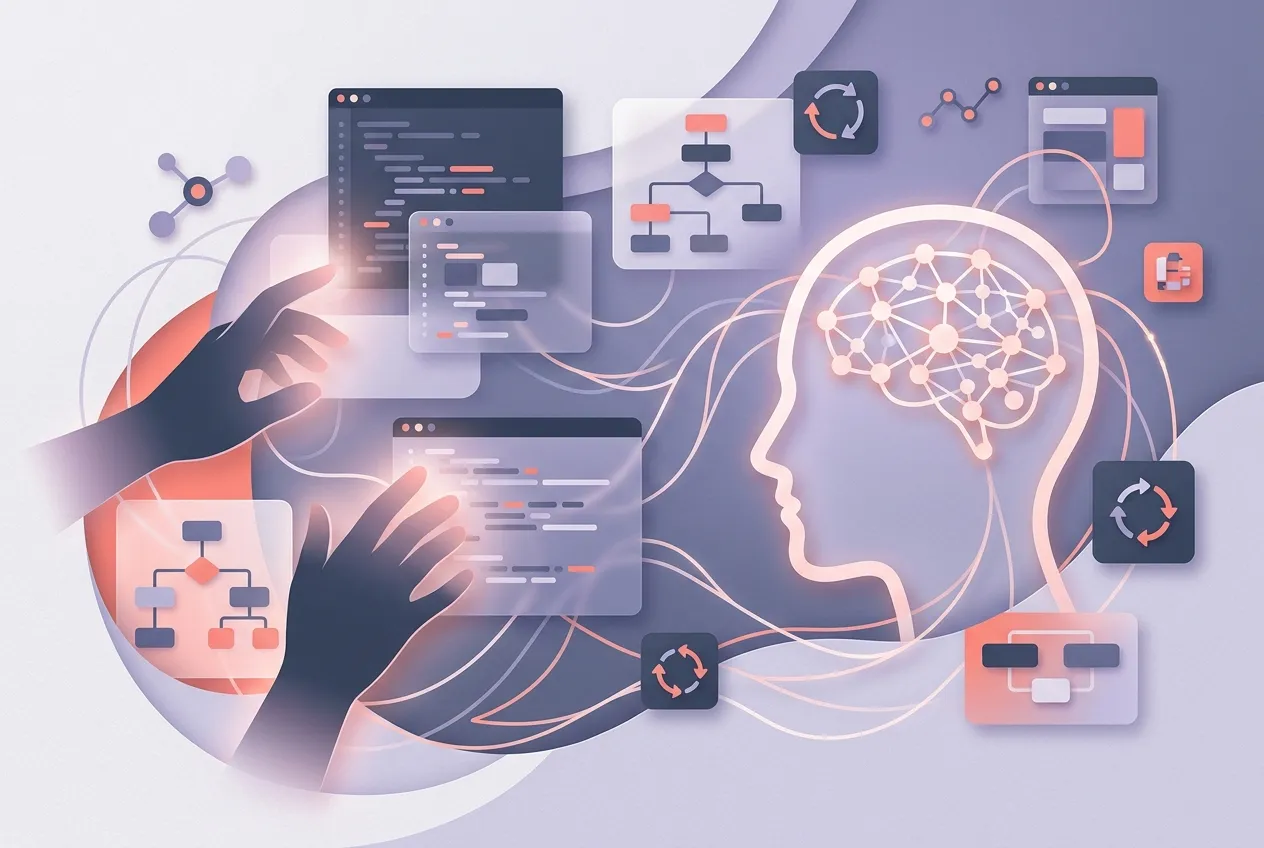
Long before today's large language models, researchers were working out how to combine several AI techniques (fuzzy logic, neural networks, evolutionary algorithms and software agents) into larger systems that could sense, reason and help people design and manage complex things. Artificial Intelligence and Integrated Intelligent Information Systems: Emerging Technologies and Applications, edited by Xuan F. Zha and published by IGI Global in 2007, is a snapshot of that work. Its twenty chapters, grouped into five sections, show how individual AI methods become parts of integrated systems. This guide offers a route through the book and explains why its ideas still matter.
Get the book: View AI and Integrated Intelligent Information Systems on Amazon
What this book is (and who it's for)
This is an edited research collection. Zha, whose listed affiliations include the U.S. National Institute of Standards and Technology, the University of Maryland and Shanghai Jiao Tong University, brought together chapters on customised logic systems, agent-based modelling, human-centred models, multi-mobile agent systems, product development, fuzzy systems, neural networks and ambient intelligence.
It is best suited to:
- Graduate students and researchers in AI, information systems or engineering design who want to see how hybrid techniques were applied across domains.
- Engineers and system architects interested in how intelligent components fit into larger information and design systems.
- Readers studying the history of applied AI, who want to understand the soft-computing and agent-based ideas that preceded today's deep-learning boom.
Because it dates from 2007, treat it as a source of durable concepts and design patterns rather than a guide to current tools.
Before you start
- Soft computing basics: fuzzy sets and rules, simple feed-forward neural networks, and genetic algorithms.
- Software agents: what makes an agent autonomous and how multiple agents coordinate.
- Systems thinking: comfort with block diagrams, models and the idea of integrating subsystems.
- Some optimisation intuition: for example, why the travelling salesman problem is hard.
How to read it
The five sections are fairly self-contained, so choose a path based on your interests.
Section I: Emerging intelligent technologies and applications
This opening section covers human-based models for ambient intelligence environments, an ant colony system applied to the travelling salesman problem and clustering, information networks viewed as complex self-repairing systems, and decision fusion for distributed medical data on grids. Start with the ant colony chapter: it is a classic, intuitive example of nature-inspired computing.
Section II: Hybrid intelligent systems and applications
This is the conceptual core for many readers. Chapters cover designing hierarchical fuzzy systems with genetic algorithms, combining evolutionary methods with language technologies for text mining, an evolutionary framework for time-series prediction using gated mixtures of experts, and AI in process control for electrochemical discharge machining. Read the fuzzy-plus-genetic chapter first; it shows clearly how one technique can tune another.
Section III: Innovative intelligent computing, information and control
Here the focus is perception and control: neural networks with genetic template matching for real-time face detection, coloured local invariant features for object description, automated object detection and tracking for visual surveillance using sensor networks, and a fuzzy "coach-player" scheme for controlling a robot manipulator. Readers interested in vision or robotics should prioritise this section; others can skim it on a first pass.
Section IV: Modelling and development of intelligent information systems
This section turns to engineering the systems themselves: multi-level modelling of multi-mobile agent systems, an intelligent information system for object-oriented software design, an agent-based formal approach to modelling and verifying integrated intelligent systems, and intelligent remote monitoring and maintenance. Software engineers should start here, especially with the formal-verification chapter.
Section V: Integrated intelligent product design and development
The final section applies these ideas to products: an integrated intelligent system model for virtual product design (contributed by the editor), document-driven design for distributed CAD services, integrating product-recommendation services into e-markets, and a stage model for new-product-development process maturity and knowledge-management systems. Engineering-design readers can begin with this section and then work backward.
Suggested first pass
Read one chapter from each section: the ant colony chapter, the fuzzy-genetic chapter, the robot-manipulator chapter, the formal agent-modelling chapter and the integrated product-design chapter. That gives a balanced overview in five sittings.
Key ideas to take away
- Hybrid beats single-method. Many chapters pair techniques, such as evolutionary search tuning fuzzy rules, so each covers the other's weaknesses.
- Agents are a way to organise complexity. Breaking a system into cooperating autonomous parts makes it easier to model, verify and extend.
- Integration is an engineering discipline. Getting intelligent components to work together requires modelling, verification and attention to process maturity.
- Nature-inspired methods are practical tools, useful for routing, clustering and optimisation problems.
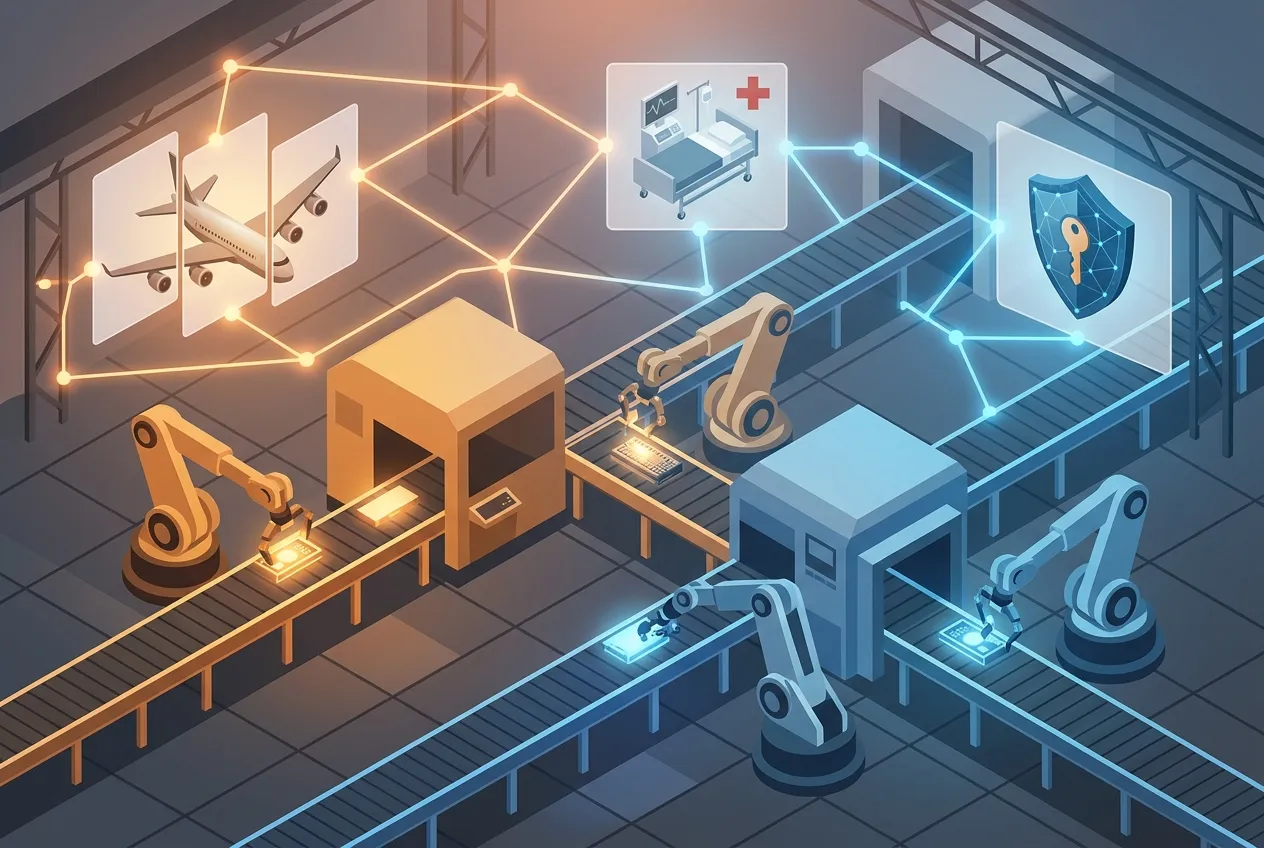
- Applications span far beyond computing, from manufacturing and medicine to surveillance and e-commerce.
Practice and discussion questions
- Explain in plain language how an ant colony algorithm finds short routes. Why does pheromone evaporation matter?
- What problem does using a genetic algorithm to design a hierarchical fuzzy system solve? What are the trade-offs?
- Compare an agent-based design with a monolithic design for a remote monitoring system. Which is easier to verify?
- Which chapter's approach would most likely be replaced by deep learning today, and which would still be used? Why?
- How do recommendation services change product design and selling in an e-market?
- What ethical and privacy questions arise from the surveillance and ambient-intelligence chapters?
- Sketch an integrated intelligent system for a domain you know, naming which AI technique each component would use.
Pair it with
- A modern machine learning or deep learning text, to compare these hybrid approaches with current methods.
- Multi-agent systems and formal methods, to go deeper on the modelling ideas in Section IV.
- Related books in the store: BooksPlusAi also stocks Advances in Soft Computing (MICAI 2021) and Algorithms for Reinforcement Learning, which extend the soft-computing and learning themes found here.
Keep going
This book rewards readers who enjoy seeing how ideas connect. Pick a section that matches your goals, keep the bigger question in mind (how do intelligent parts become an intelligent whole?), and you will find concepts that still inform system design today. Get AI and Integrated Intelligent Information Systems on Amazon and begin with the hybrid systems in Section II.
As an Amazon Associate, BooksPlusAi may earn from qualifying purchases.
Sources
Browse the books mentioned here and more on our shelves.

Comments
No comments yet — be the first to share your thoughts.
Join the discussion