Reading Guide: Artificial Intelligence for Environmental Sustainability and Green Initiatives
For students, researchers and practitioners who want to see machine learning applied to climate, energy, agriculture and health
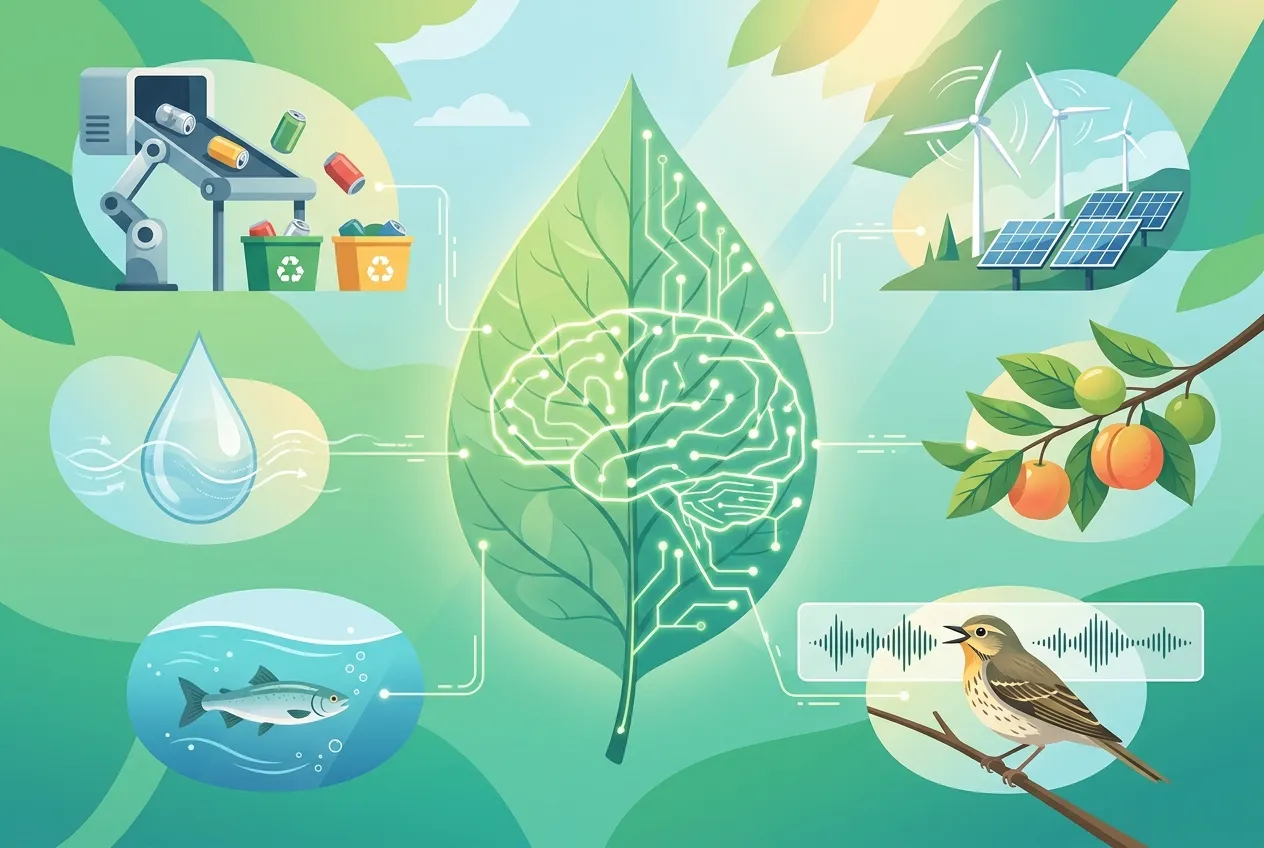
Can machine learning help sort recycling, forecast electricity demand or predict water quality? Artificial Intelligence for Environmental Sustainability and Green Initiatives, edited by Aboul Ella Hassanien, Ashraf Darwish and Sally M. Elghamrawy and published by Springer as volume 542 of the Studies in Systems, Decision and Control series, gathers twenty chapters that each tackle one such question with real data and real models. This guide shows you how to move through it efficiently and what to take away.
Get the book: View AI for Environmental Sustainability on Amazon
What this book is (and who it's for)
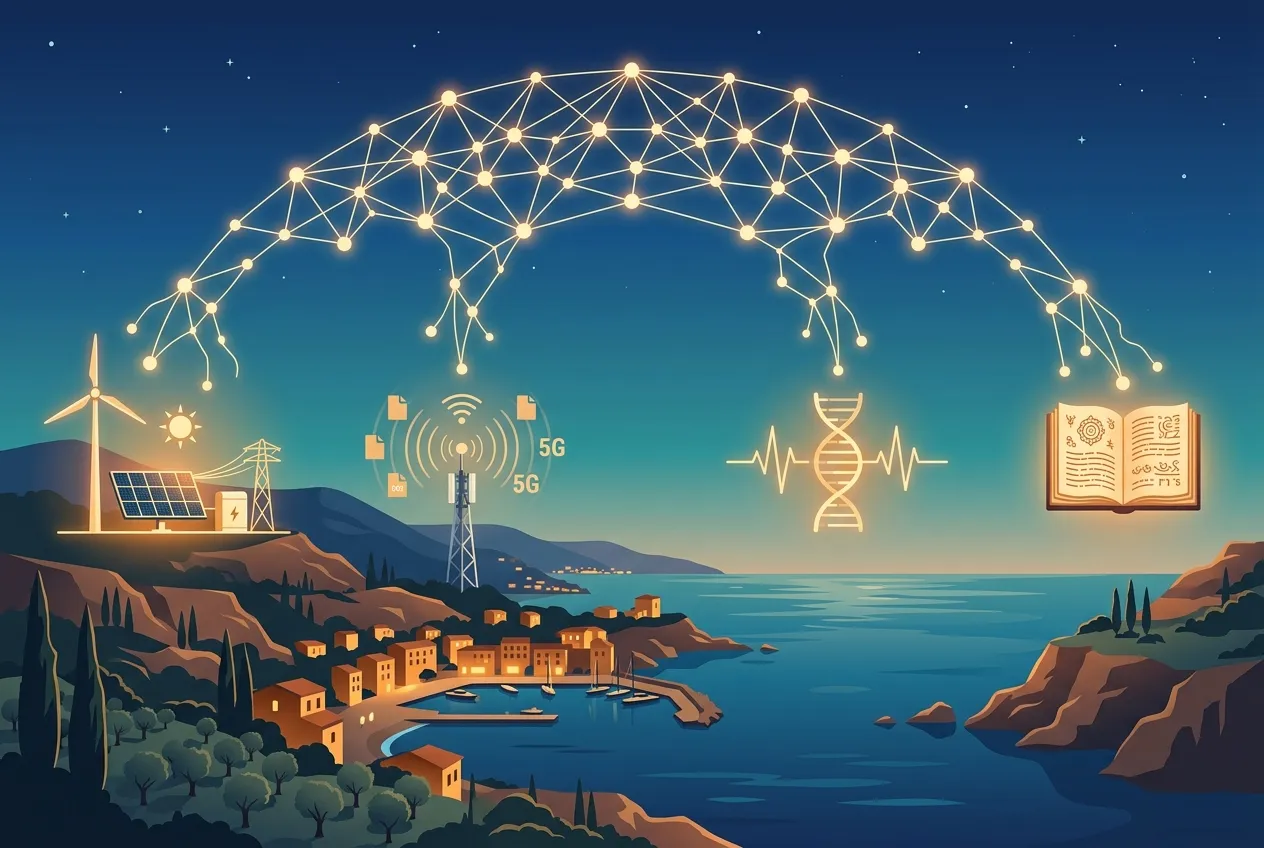
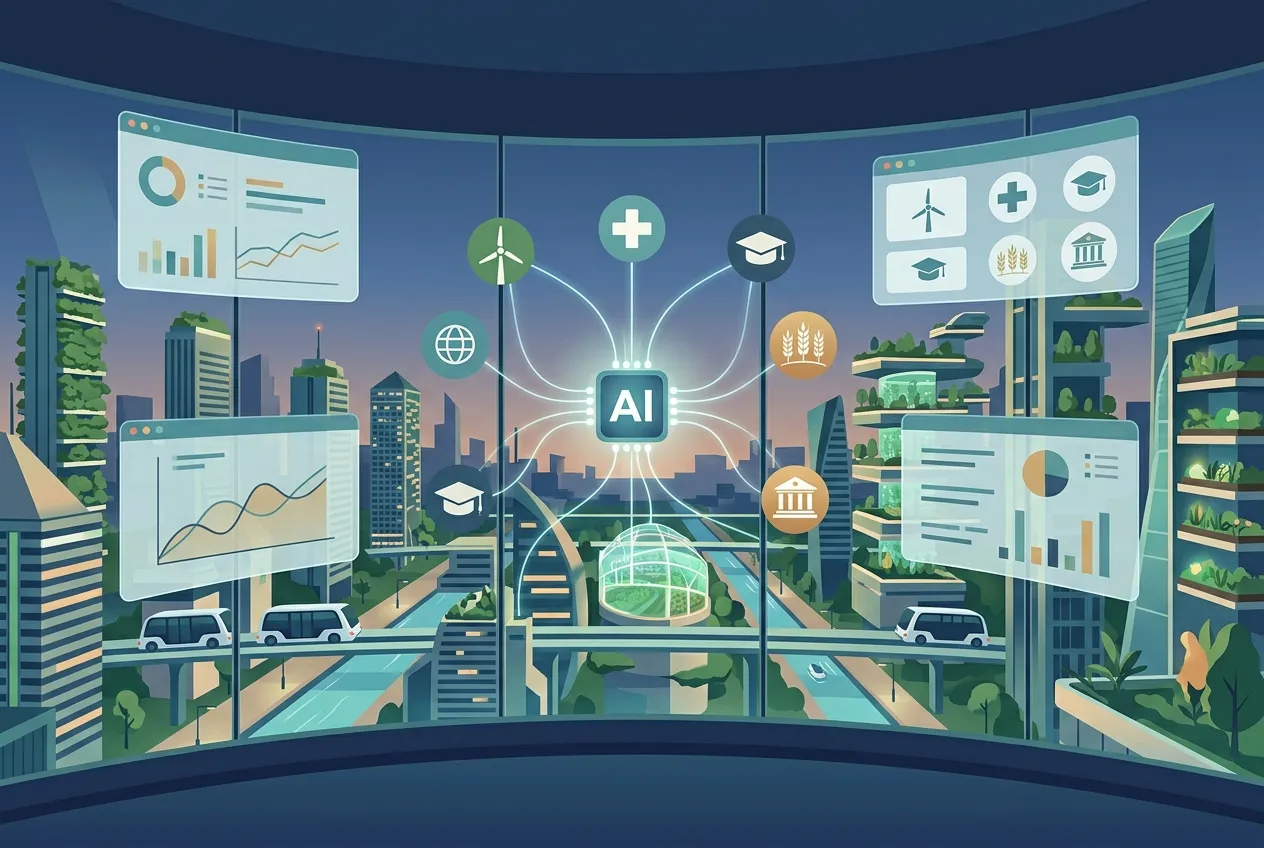
This is an edited research volume of roughly 360 pages, first published in 2024. According to the publisher, it looks at how AI can support sustainability in energy, healthcare, agriculture, transportation and waste management, considers "green initiatives" in areas such as energy, finance and drug discovery, and discusses the ethical benefits and challenges of bringing AI into sustainability work.
It is organized in two parts:
- Part 1: Artificial Intelligence for Environmental Sustainability — applications aimed directly at the environment: waste, water, climate, agriculture, wildlife and renewable energy.
- Part 2: Applications and Innovations in Green Initiatives — a broader set of applications, many in health and drug research, plus smart cities and finance.
It suits upper-level undergraduates, graduate students and researchers in computer science or environmental engineering, and practitioners looking for worked examples of ML on sustainability problems. You will follow it best if you know the basics of supervised learning and have met convolutional neural networks and common classifiers such as SVMs.
Before you start
- Brush up on transfer learning with pretrained CNNs (DenseNet, MobileNet, Inception): several chapters build on these.
- Review evaluation metrics for classification and regression, so you can judge each chapter's results.
- If you want to experiment, a Python environment with scikit-learn and a deep-learning library is enough to try similar pipelines on public datasets.
How to read it
Because each chapter stands alone, read by interest rather than in strict order. A practical roadmap:
- Start with the environmental core of Part 1. The chapters on machine-learning forecasting of electricity demand, AI for water-quality analysis and prediction, and predicting climate-change effects across countries are the clearest illustrations of the book's theme.
- Then the computer-vision cluster. Recognizing aluminium beverage cans in mixed waste, classifying flowers with an eye on carbon footprint, fruit classification and ripeness detection for greener agriculture, and fish recognition for a marine-life education system all show image models applied to sustainability.
- Audio and energy chapters. Bird-song classification from spectrogram features and predicting biodiesel yield from sunflower oil round out Part 1 with less common data types.
- Part 2 by your field. Health readers will find chapters on heart-disease risk, breast-tumour classification, drug–drug interactions and synergistic drug combinations. Smart-city readers should go to the chapter on human activity recognition with smartphone sensors; finance readers to AI for risk prediction in the finance sector. Drone-versus-bird detection also sits here.
On a first pass, skim the optimization-heavy chapters (for example those built on metaheuristics like snake or golden jackal optimization) unless that is your specialty; their main ideas come through in the introduction and results.
Key ideas to take away
- Sustainability is a data problem as well as a policy one. Many gains come from better measurement, forecasting and sorting.
- Pretrained models lower the barrier. Transfer learning lets small teams build useful classifiers without huge datasets.
- Efficiency counts. The book's attention to low-carbon models is a reminder that AI itself has an environmental cost.
- "Green" is broad. The editors include health and finance under green initiatives, which invites you to think about what sustainability should cover.
- Ethics belongs in the design. Benefits and risks of AI in sustainability are part of the book's framing, not an afterthought.
Practice and discussion questions
- Pick one Part 1 chapter. What would it take to move its model from a dataset to a working system in a city or farm?
- How would you measure the energy cost of training and running the models described? Is it worth the benefit?
- Which chapters use public datasets, and which use private ones? How does that affect your trust in the results?
- Do the health and finance chapters belong in a sustainability book? Make the case for and against.
- Choose a sustainability problem in your own region. Which chapter's method would you adapt first, and why?
- What ethical risks could arise if an automated waste-sorting or water-quality system makes mistakes?
Pair it with
- Green AI and efficient deep learning: measuring and reducing the compute and carbon cost of models.
- Time-series forecasting: the backbone of energy-demand and climate prediction work.
- Related books in our store: Artificial Intelligence and Technology: Systems Management, Decisions and Control for Sustainability in the Digital Age (same Springer series) and Artificial Intelligence and Sustainable Computing. Find them on the Books Plus Ai shelf.
Closing thoughts
This volume is best used as a source of worked examples: pick a chapter close to your interests, study how the authors framed the problem and evaluated their model, and then try the idea on data of your own. It is a practical way to see where AI can make a measurable difference for the environment. Get AI for Environmental Sustainability and Green Initiatives on Amazon.
As an Amazon Associate, BooksPlusAi may earn from qualifying purchases.
Sources
Browse the books mentioned here and more on our shelves.








Comments
No comments yet — be the first to share your thoughts.
Join the discussion