Reading Guide: Artificial Intelligence and Sustainable Computing (ICSISCET 2022)
For engineering students, early researchers and practitioners exploring soft computing for real-world problems
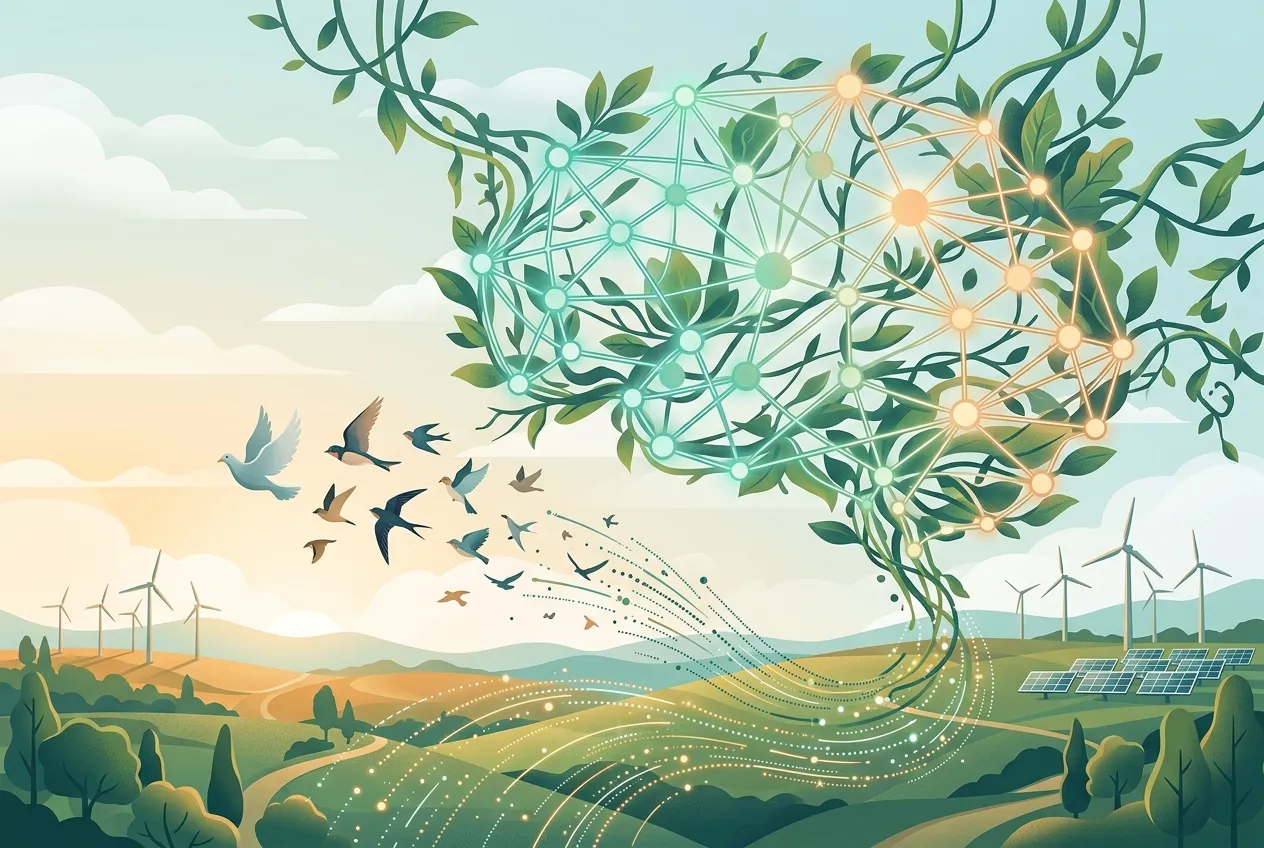
Artificial Intelligence and Sustainable Computing: Proceedings of ICSISCET 2022 collects the research presented at the 4th International Conference on Sustainable and Innovative Solutions for Current Challenges in Engineering and Technology, held at Madhav Institute of Technology & Science (MITS) in Gwalior, India, on November 19–20, 2022. Edited by Manjaree Pandit, M. K. Gaur and Sandeep Kumar and published by Springer in the Algorithms for Intelligent Systems series, the volume gathers 59 papers. That is a lot of material, and proceedings are not meant to be read cover to cover. This guide shows you how to get real value from it without getting lost.
Get the book: View Artificial Intelligence and Sustainable Computing (ICSISCET 2022) on Amazon
What this book is (and who it's for)
This is a conference proceedings volume, not a textbook. Each paper is a short, self-contained research report written by a different team, usually describing a problem, a method, an experiment and results. The publisher describes the common thread as AI techniques that combine nature-inspired algorithms, evolutionary computing, fuzzy systems, computational intelligence, machine learning and deep learning, applied to real engineering problems where a precise mathematical model is hard to build.
It suits several readers:
- Final-year undergraduates and master's students looking for a project topic or a baseline method to reproduce.
- PhD students and early researchers who want a snapshot of how soft computing is being applied across engineering disciplines.
- Practising engineers in power systems, electronics or manufacturing who want to see which AI methods others are trying on similar problems.
You will get the most out of it if you already know basic probability, linear algebra and at least one machine learning workflow (train, validate, test). Readers new to AI can still use it, but should pair it with an introductory text.
Before you start
Set yourself up to read research, not to absorb a narrative:
- Have a goal. Pick one question, such as "Which optimization methods are used for energy problems?" or "How is deep learning applied to medical images here?", and read toward it.
- Keep a paper log. A simple spreadsheet with columns for problem, method, dataset, metric and result makes it easy to compare papers later.
- Have a coding environment ready. If you want to reproduce a result, Python with NumPy, scikit-learn and a deep learning library covers most methods in this field.
- Know the vocabulary. Brush up on genetic algorithms, particle swarm optimization, fuzzy inference and convolutional neural networks if those terms are unfamiliar.
How to read it
Because the volume is organized as a list of papers rather than a guided course, organize it yourself by theme. Skim the table of contents first and sort papers into rough groups. Based on the publisher's description of the scope, these groups will serve most readers:
1. Nature-inspired and evolutionary optimization
Papers in this group use population-based search to tune designs, parameters or schedules. Start here if you work in energy systems or engineering design. Read the problem formulation and the comparison tables closely; skim the algorithm pseudocode unless you plan to implement it.
2. Fuzzy systems and computational intelligence
These papers handle uncertainty and imprecise inputs. They are a good entry point for control engineers. Focus on how the membership functions and rule bases were chosen, since that is where most of the engineering judgment lives.
3. Machine learning and deep learning applications
Expect classification, prediction and detection tasks across a range of domains. Students looking for a project should start here: applied machine learning papers usually name their dataset, which makes them easier to reproduce.
4. Sustainability-focused engineering
Given the conference's emphasis on sustainable solutions, look for papers that link AI to energy efficiency, resource use or environmental monitoring. Policy-minded readers and anyone writing a literature review on "green AI" applications should prioritize these.
A first-pass reading routine
- Read the abstract and conclusion of every paper in your chosen group (about five minutes each).
- Choose three to five papers that best match your goal and read them fully.
- For each, write down what baseline it compared against and whether the data is public.
- Skip detailed derivations and long parameter tables on a first pass; return to them only for papers you plan to build on.
Key ideas to take away
- Model-free methods are practical. The editors stress that learning-based and nature-inspired methods are useful precisely because they do not need an exact model of the system and can learn from data.
- Hybrid approaches are common. Applied AI work often combines techniques, for example using an evolutionary algorithm to tune a neural network or a fuzzy controller.
- Evaluation varies widely. Proceedings papers differ in rigor. Learning to judge datasets, baselines and metrics is itself a key skill this volume will sharpen.
- Sustainability is a design goal, not a buzzword. The strongest papers show measurable gains in efficiency, cost or resource use.
Practice and discussion questions
- Pick two papers that tackle similar problems with different methods. Which comparison would you need to run to decide which is better?
- For a nature-inspired optimization paper, what would happen if you swapped the algorithm for a simple random search? Did the authors test this?
- Choose one machine learning paper and list everything you would need to reproduce it. What is missing?
- How do the authors define "sustainable" in the papers you read? Is it measured or only claimed?
- Which paper's method could transfer to a problem in your own field or job, and what would need to change?
- Where do fuzzy systems still offer an advantage over deep learning, based on what you read?
Pair it with
- The follow-up volume. The same editors published Artificial Intelligence and Sustainable Computing: Proceedings of ICSISCET 2023 (Springer), also available in our store. Reading both shows how topics shifted year to year.
- Optimization fundamentals. A solid grounding in metaheuristics (genetic algorithms, swarm methods, simulated annealing) makes the optimization papers much easier to judge.
- Research methods and reproducibility. Practice with experimental design, statistical testing and benchmarking will help you separate strong results from weak ones.
Ready to dig in?
Proceedings reward readers who come with a question. Pick one theme, read a handful of papers well, and you will leave with fresh methods, datasets and ideas for your own work. Get Artificial Intelligence and Sustainable Computing (ICSISCET 2022) on Amazon, or browse more titles on the BooksPlusAi shelf.
As an Amazon Associate, BooksPlusAi may earn from qualifying purchases.
Sources
Browse the books mentioned here and more on our shelves.












Comments
No comments yet — be the first to share your thoughts.
Join the discussion