Reading Guide: Artificial Intelligence and Cybersecurity
For students, researchers and security practitioners exploring where machine learning meets cyber defence
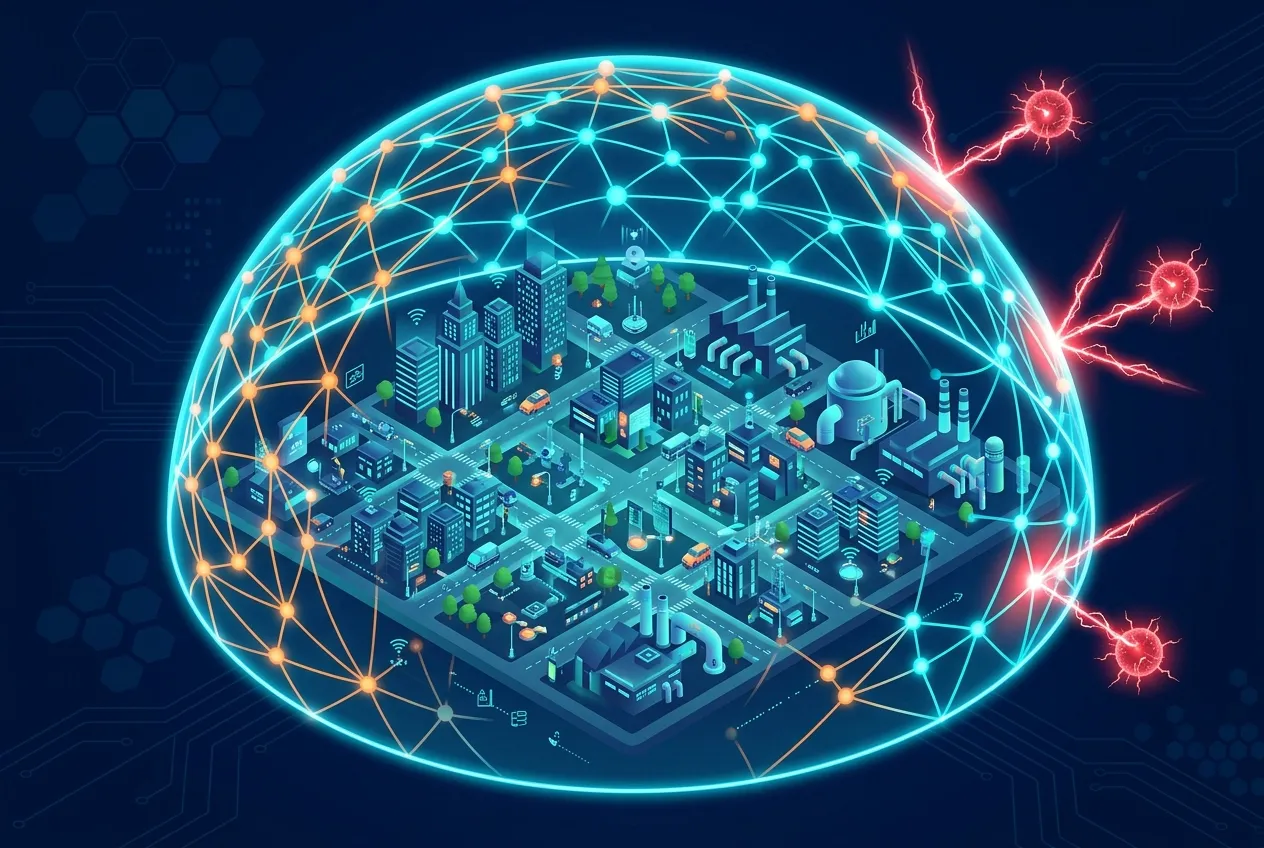
Artificial intelligence is changing how organisations detect threats, protect connected devices and secure online transactions, and it is also changing what attackers can do. Artificial Intelligence and Cybersecurity: Advances and Innovations, edited by Ishaani Priyadarshini and Rohit Sharma and published by CRC Press in its Green Engineering and Technology series, collects twelve contributed chapters on this meeting point. It is a compact volume (around 210 pages), which makes it a realistic book to finish. This guide helps you decide where to start and how to get the most from an edited collection that ranges well beyond classic network security.
Get the book: View Artificial Intelligence and Cybersecurity on Amazon
What this book is (and who it's for)
This is an edited research collection rather than a step-by-step textbook. The publisher describes it as an interdisciplinary platform for researchers, practitioners and educators, with an emphasis on how AI supports security in smart-city systems, intelligent data management and automated systems. Each chapter is written by different contributors, so depth and style vary.
It suits:
- Undergraduate and graduate students in computer science, electronics or information security who want survey-style chapters to orient a project or literature review.
- Researchers looking for a broad view of applied AI topics that touch security, IoT and data-driven systems.
- Practitioners and educators who want accessible overviews of IoT security, blockchain-based protection and e-commerce security to inform teaching or planning.
Readers expecting a hands-on penetration-testing manual or a single unified framework should adjust expectations: several chapters apply machine learning to domains such as healthcare and agriculture, with security as one strand among several.
Before you start
- Security basics: the confidentiality–integrity–availability triad, common attack types (malware, phishing, denial of service, man-in-the-middle) and the idea of risk management.
- Machine learning basics: supervised classification, feature extraction, and how models are evaluated with accuracy, precision and recall.
- IoT architecture: a rough picture of devices, gateways, networks and cloud services, since several chapters build on it.
- Blockchain essentials: what a distributed ledger is and why tamper-evidence matters.
How to read it
Because the chapters are independent, read by theme rather than in page order.
Track 1: Core cybersecurity (start here)
Begin with the security heart of the book. Chapter 3 looks at cybersecurity solutions and communication technologies for IoT applications, and Chapter 4 at cyberattacks and risk-management strategy in IoT architecture. Read them as a pair: one surveys protective technology, the other frames threats and how to manage them. Then move to Chapter 5 on blockchain-based security for Industry 4.0 and Chapter 8, a study of security in electronic-commerce frameworks. Together these four chapters form a short course on securing connected and transactional systems.
Track 2: Applied machine learning
Next, read the chapters where AI techniques are the main subject. Chapter 1 compares machine-learning approaches to heart-disease prediction, Chapter 7 surveys facial-feature-based emotion detection, and Chapter 11 offers a broad study of metaheuristics, big data and deep neural network strategies. Chapter 11 is a useful conceptual bridge if your ML background is thin.
Track 3: Sensing, health and agriculture
Chapter 2 discusses AI's role in photonic crystal sensing for tumour detection, Chapter 10 presents a compression technique for multimodal biosignals in wearable health monitoring, Chapter 6 reviews precision agriculture built on embedded systems, and Chapter 9 reviews algorithms for identifying paddy (rice) diseases. Read these if you work in those domains, or skim them on a first pass and return later.
Track 4: Social networks
Chapter 12 closes the book with communication strategies for interaction in social networks from a multilingual perspective. It pairs well with Track 1 if you are interested in social-engineering risks.
A one-week plan
Day 1: preface and Chapters 3–4. Day 2: Chapters 5 and 8. Day 3: Chapter 11. Days 4–5: Chapters 1 and 7. Days 6–7: whichever domain chapters match your interests, plus Chapter 12.
Key ideas to take away
- Connected devices widen the attack surface. IoT systems combine constrained hardware, many network links and cloud services, and each layer needs protection.
- Risk management is a process, not a product. Identifying threats, judging their impact and choosing controls matters as much as any single tool.
- Blockchain is a tool for integrity and trust, useful where many parties must share records, but it is not a cure-all.
- AI cuts both ways. The same pattern-recognition techniques that classify diseases or emotions can flag anomalous network behaviour, and can be misused.
- Data quality and privacy run through everything, from health signals on wearables to transactions in online stores.
Practice and discussion questions
- Sketch a simple IoT architecture for a smart home. Where would the attacks discussed in Chapter 4 most likely occur?
- Which security problems in Industry 4.0 does a blockchain approach address well, and which does it leave unsolved?
- List three threats to an e-commerce platform and match each with a control you would prioritise.
- How could the classification techniques used for disease prediction be adapted to intrusion detection? What would change about the data?
- Wearable health devices collect sensitive data. What security and privacy safeguards should accompany biosignal compression and transmission?
- Where might attackers use AI against the systems described in this book?
- Pick the chapter you found most convincing. What evidence made it so, and what would you want to see next?
Pair it with
- A general network-security text to deepen the fundamentals behind Chapters 3–5 and 8.
- Hands-on machine learning practice with public intrusion-detection or anomaly datasets, to make the AI chapters concrete.
- Another security volume in the store: BooksPlusAi also carries Advances in Artificial Intelligence and Security (ICAIS 2022), a conference proceedings volume that goes deeper into research papers on the same intersection.
Keep going
You do not need to be a security specialist to benefit from this book. Start with the IoT and risk chapters, follow the themes that matter to you, and use the questions above to test what you have learned. By the end, you will see how AI and cybersecurity increasingly shape each other. Get Artificial Intelligence and Cybersecurity on Amazon and start with Chapters 3 and 4.
As an Amazon Associate, BooksPlusAi may earn from qualifying purchases.
Sources
Browse the books mentioned here and more on our shelves.





Comments
No comments yet — be the first to share your thoughts.
Join the discussion