Reading Guide: Advances in AI Applications in Industrial and Systems Engineering
For engineers, managers and students who want to see where AI fits in real industrial systems
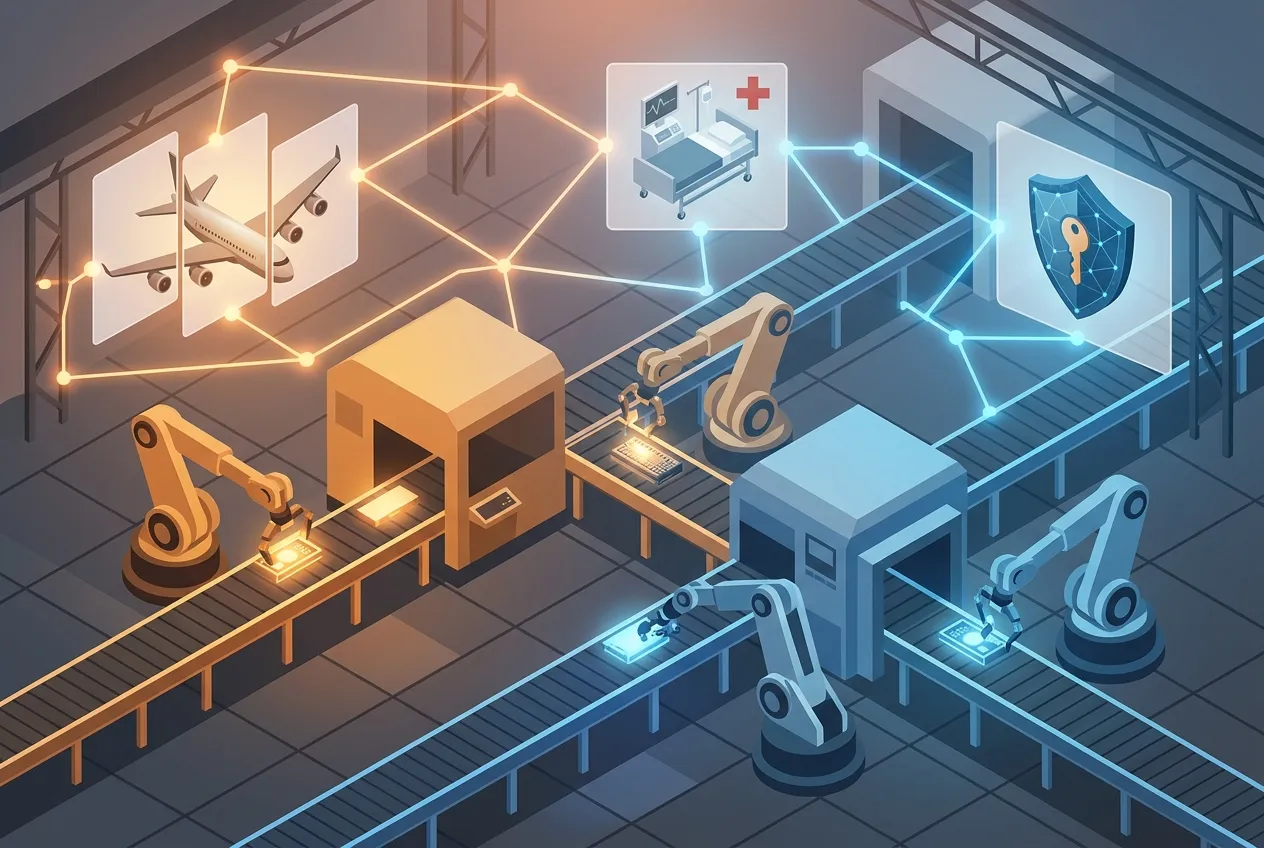
Industrial and systems engineers have always been in the business of making complex systems work better: factories, hospitals, supply chains, aircraft operations. Artificial intelligence is now one of the most powerful tools in that kit. Advances in Artificial Intelligence Applications in Industrial and Systems Engineering, edited by Waldemar Karwowski, Vincent Duffy and Gavriel Salvendy and published by Wiley in 2025, is the first book in Wiley's Advances in Industrial and Systems Engineering series. It surveys how AI techniques are being applied across the discipline, from manufacturing floors to cybersecurity and defense. This guide helps you plan your way through its roughly 400 pages.
Get the book: View AI Applications in Industrial and Systems Engineering on Amazon
What this book is (and who it's for)
This is an edited volume of 14 chapters, each focused on an application area or theme. The publisher describes it as a practical toolkit for bringing AI into system design and operation, touching on big data analytics, machine learning, cloud-based AI, neural technologies, metaverse modeling and simulation, reinforcement learning, natural language processing, and ethical concerns.
It is aimed at professionals and students in engineering, computer science and business. It works well for:
- Practicing industrial and manufacturing engineers who want a broad map of where AI is being used.
- Managers and decision-makers weighing AI investments in operations, logistics or quality.
- Graduate students in industrial engineering, operations research or human factors looking for research directions.
You don't need to be a machine-learning specialist, but a basic grasp of what supervised learning, neural networks and optimization are will make the chapters much easier to absorb.
Before you start
- Know your own context. Write down the one or two systems you care about most (a production line, a hospital workflow, a fleet). You'll read faster when you're looking for ideas to apply.
- Brush up on AI vocabulary. Terms like reinforcement learning, large language models and intelligent agents appear throughout.
- Expect variety. Because chapters come from different contributors, depth and style vary. That's normal for an edited volume.
How to read it
The chapters fall into a few natural groups. Here is a suggested route.
1. Foundations (read first)
Start with Chapter 1, Introduction to Industrial Artificial Intelligence, and Chapter 2, Autonomous Systems and Intelligent Agents. Together they set up the vocabulary and the big picture that later chapters build on.
2. Core industrial applications
Next, read Chapter 4 on smart manufacturing, robotics and AI systems, and Chapter 3 on natural language processing for industrial and systems engineering. If you work in production or operations, these are the most directly useful chapters in the book.
3. Sector deep dives (pick what fits)
- Healthcare: Chapter 5, AI in healthcare.
- Security: Chapter 6 on AI in cybersecurity, plus Chapter 12 on securing AI systems in the era of large language models.
- Defense and government: Chapter 7 on AI in defense and Chapter 8 on AI-driven management and decision optimization at the US Department of Defense.
- Aviation: Chapter 10.
- Finance: Chapter 9 on machine-learning approaches to cryptocurrency market forecasting.
- Education: Chapter 11 on personalizing engineering education with AI in game-based learning.
On a first pass, read the introduction and conclusion of each sector chapter outside your field, then go deeper only where something sparks an idea.
4. Big-picture close (read last)
Finish with Chapter 13 on responsible AI for social good and Chapter 14 on future directions. These chapters tie the applications back to ethics and to where the field is heading.
Key ideas to take away
- AI is a systems problem. Value comes from integrating models into processes, people and decisions, not from the algorithm alone.
- The same techniques travel across sectors. Methods such as machine learning, NLP and reinforcement learning show up in manufacturing, healthcare, defense and aviation alike.
- Security is part of the design. AI both strengthens cybersecurity and introduces new attack surfaces, especially with large language models.
- Responsibility can't be an afterthought. The book treats ethics and social good as core engineering concerns.
Practice and discussion questions
- Pick a system you know well. Which chapter's ideas could you apply to it first, and what data would you need?
- What distinguishes an autonomous system from a conventional automated one?
- Where could natural language processing remove friction in an industrial workflow, such as maintenance logs or quality reports?
- How do the risks of AI in healthcare compare with the risks of AI in aviation or defense?
- What new security concerns do large language models create for engineering organizations?
- How would you measure whether an AI deployment is "responsible" in practice?
- Which of the future directions in the final chapter seems most likely to affect your work within five years?
Pair it with
- Human-AI collaboration. The same three editors also produced Advances in Human-AI Collaboration for Wiley, a natural companion if the human side of these systems interests you.
- Reinforcement learning. For a deeper technical foundation, our store carries Algorithms for Reinforcement Learning from the Synthesis Lectures on Artificial Intelligence and Machine Learning.
- Applied AI research. For a research-paper view of industrial AI, see the IEA/AIE proceedings in our store, such as Advances and Trends in Artificial Intelligence. From Theory to Practice.
Keep going
This book is best read with a pen and a real problem in mind. Start with the foundations, follow the chapters that match your field, and finish with the ethics and future-directions chapters, and you'll have a practical map of where AI can make your systems smarter. Get Advances in Artificial Intelligence Applications in Industrial and Systems Engineering on Amazon, or explore more on our bookshelf.
As an Amazon Associate, BooksPlusAi may earn from qualifying purchases.
Sources
Browse the books mentioned here and more on our shelves.


Comments
No comments yet — be the first to share your thoughts.
Join the discussion